

Sensor taps, also known as touchless or automatic faucets, are fixtures equipped with motion-sensing technology that allows users to activate water flow without physically touching the faucet handles. These taps typically employ infrared sensors or other proximity detection technologies to sense the presence of hands or objects and initiate the water flow accordingly. Here are some key features and aspects of sensor taps:
Hands-Free Operation: The primary function of sensor taps is to provide a hands-free experience. Users can trigger the water flow by placing their hands under the faucet, and the water stops automatically when they move away.
Hygiene: Sensor taps contribute to improved hygiene by minimizing contact with faucet handles, reducing the risk of spreading germs and bacteria. This is particularly beneficial in environments where maintaining cleanliness is crucial, such as kitchens and bathrooms.
Water Conservation: Many sensor taps are designed with water-saving features. The automatic shut-off mechanism ensures that water stops flowing when it's not actively needed, promoting water conservation and efficiency.
What is Sensor Taps
A sensor tap is a machine that works with the help of a sensor. It has an in-built sensor that detects any movement, such as the showing of hands or any other thing. Upon detection of any such movement, the sensor tap lets out the flow of water.
Benefits of Sensor Taps
Hygiene
As the sensor taps are touch-free, nothing unwanted touches us. These taps need not be handled manually, and therefore the chances of getting exposed to viruses and bacteria present on the tap’s surface are almost negligible.
Water conservation
Finding ways to save water is very important. Automatic taps are usually designed with a low flow rate, an aerator in the spout and system, or materials that prevent leakage.while traditional basin faucets pour between 10 and 15 liters per minute. Sensor faucets would not use more than 6 liters and their valva is closed by default. Bear in mind tap can waste between 200 ml and 1 liter per hour.
Money saving
Although touchless faucets cost more than regular faucets, the initial outlay is offset by the reduction in your water bill, meaning they’re not only good for the planet but good for your bank balance too.
-

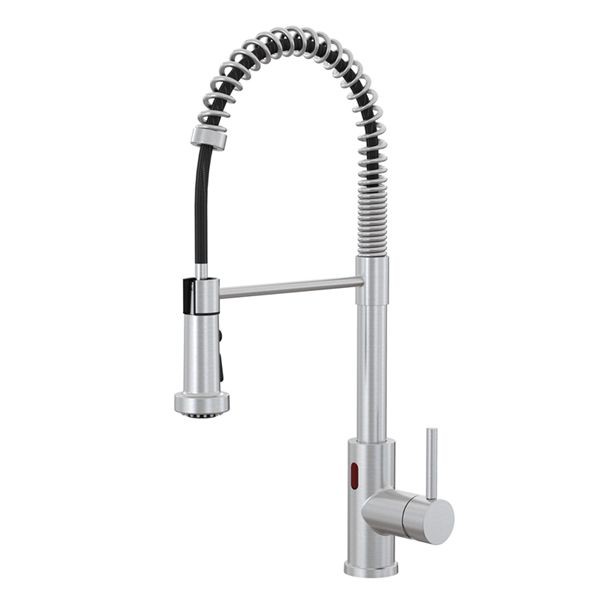
Touch Control Kitchen Faucet With Sensor
Stainless steel handle,body and spout Ceramic cartridge. Integrated solenoid valve
Add to Inquiry -
Dual Sensor function with manual override . Pull Down Sensor+ IR sensor. With pull-down hand spray.
Add to Inquiry -
Touchless Kitchen Faucet With Sprayer
IR sensor+manual override . With pull-down hand spray . Zinc alloy lever handle. Lead-free brass
Add to Inquiry -
Stainless steel handle. Body and spout Ceramic cartridge . With quick connector for hoses
Add to Inquiry -
60019A(308AA019). Stainless steel handle, body and spout. Ceramic cartridge . Quick mount
Add to Inquiry -
60008B(308AA008). Zinc alloy lever handle . Lead-free non-metallic interior . ABS or Zinc body
Add to Inquiry -
Touchless Commercial Kitchen Faucet
60001A(308AA001). Zinc alloy lever handle . Lead-free non-metallic interior . ABS or Zinc body
Add to Inquiry


The sensor taps refer to the principle of infrared reflection when the human hand is placed in the infrared area of the faucet, the infrared rays emitted by the infrared transmitting tube are reflected in the infrared receiving tube due to the obstruction of the human hand, and the signal is sent through the microcomputer in the integrated circuit, give the pulse solenoid valve, after receiving the signal, the solenoid valve opens the valve core according to the specified instruction to control the water outflow from the faucet; when the human hand leaves the infrared sensing range, the solenoid valve does not receive the signal, and the solenoid valve core is reset by the internal spring, control the water faucet to turn off.
The sensor faucet is a newly invented high-tech product that is widely used in hotels, guesthouses, office buildings, and other high-end places. It helps enterprises save water and save money while being more environmentally friendly and doing their part for cities that are short of water. With the development of induction sanitary ware, sensor water-saving faucets are widely used.
Types of Sensor Faucets
Bathroom Sensor Faucets
These faucets find their place in residential and commercial bathrooms alike. They provide touchless operation, making them an excellent choice for maintaining hygiene in public restrooms and family homes.
Kitchen Sensor Faucets
In the heart of every home, the kitchen, sensor faucets make life easier for busy cooks. The touchless feature allows users to wash dishes, rinse fruits, and carry out other kitchen tasks without spreading germs and grime.
Commercial Sensor Faucets
These heavy-duty sensor faucets are designed for high-traffic public spaces like restaurants, airports, and hospitals. They are durable, water-efficient, and minimize the risk of cross-contamination.
Wall-Mounted Sensor Faucets
Ideal for minimalist and contemporary bathrooms, these faucets are mounted on the wall, leaving the countertop clutter-free and easy to clean.
Deck-Mounted Sensor Faucets
Deck-mounted sensor faucets are a popular choice for both kitchens and bathrooms. They are installed on the sink's deck and offer a sleek and modern look.
Battery-Powered Sensor Faucets
These faucets are powered by batteries, making installation easier and more flexible, especially in areas where access to electrical outlets may be limited.
AC-Powered Sensor Faucets
AC-powered sensor faucets require a direct electrical connection. They are often chosen for high-traffic commercial settings to ensure uninterrupted operation.
Installation Instructions For Sensor Taps
Step 1: Turn Off The Water Supply
Before installing your new sensor tap, turn off the water supply to the existing fixture. You can turn the shut-off valves under the sink or shut off the main water supply.
Step 2: Remove The Old Tap In Step Two
By releasing the nuts holding the old tap, you can remove it after the water supply has been cut off. First, loosen the nuts using a wrench or pair of pliers to remove the tap.
Step 3: Install The Sensor Tap In Step Three
The new sensor tap must now be installed. Start by screwing the mounting hardware onto the countertop or sink. Following the manufacturer’s directions, connect the water supply lines to the tap.
Step 4: Check The Tap
After installing the sensor tap
Turn the water supply back on before checking the fixture.
To test the sensor’s functionality, please place your hands under the tap.
In case of any problems, kindly consult the instructions provided by the manufacturer or seek assistance from a certified plumber.
Step 5: Enjoy Your New Sensor Tap
Congratulations, you’ve successfully installed your new sensor tap! Enjoy touchless technology’s convenience, hygiene, and water-saving benefits in your kitchen or bathroom.
An object i.e. hands approaches the sensor eye. The infrared proximity is triggered or disrupted once an object enters its infrared sensing zone.
Infrared sensor range: The proximity sensor zone is live once powered (Typical sensor range 20 - 26 cm wide)
Sensor eye part beams out infra red signal: Sensor signal wire transfers or sends an electronic signal to the solenoid valve '5' to OPEN or CLOSE.
Solenoid valve acts as a latching mechanism that restricts or allows water to flow through it: It opens up and releases water through the flexible hose as soon as an electronic signal is received from the sensor. The solenoid valve is always in CLOSED position, and opens up once an electronic signal is received, it goes back to CLOSED position when the object leaves the infra red sensing zone.
Water IN (Hot, Cold or Premix water): Main water supply entry.
Water OUT passage: The flexible hose transfers water released from the solenoid valve to the sensor tap.
WATER OUT: Water exits- Water let through the solenoid valve comes out.

Choosing the Right Sensor Tap
Usage Frequency
For high-traffic areas or places where taps are in constant use, mains-powered taps are the better choice due to their uninterrupted operation.
Installation Location
If you’re retrofitting an existing space or need flexibility in faucet placement, battery-powered taps are a convenient option.
Environmental Impact
If you’re environmentally conscious and want to minimise energy consumption, mains-powered taps with energy-efficient features might be preferable.
Budget Constraints
If you have budget constraints, battery-powered taps provide a cost-effective solution upfront.
Battery or power failure
Let’s begin by addressing one of the most apparent causes of sensor taps not working in a washroom.
In the case of battery powered sensor taps, the batteries may have drained or become faulty, leading to a loss of power. This can happen if the batteries are not replaced regularly or if they are of low quality.
For transformer powered sensor taps, power cuts can occur due to issues with the electrical supply or wiring in a poorly manufactured circuit board. A tripped circuit breaker, a blown fuse, or a fault in the electrical system can cause the power to be cut off.
Poor quality sensor taps
There are numerous inexpensive touch free taps available on the market that are poor quality and have sensors that do not last.
During the value engineering process, there may be a temptation to downgrade the specifications and purchase sensor taps that are very cheap.specifiers are actually doing themselves a disservice by choosing such taps because they are of poor quality and have a tendency to break down within a year or two.
Therefore, sensor taps not working in a washroom could be due to its cheap material make up and defective wiring.
Slow delay in time
Have you ever stepped into a washroom to try to wash your hands under a sensor tap and as you put your hands underneath the spout, nothing happens.
This can be due to the tap settings or a poor quality sensor which can contribute to a slow delay in response time. A slow delay in time refers to the time it takes for the sensor to activate and switch on the water flow.
As a result, users may find themselves waving their hands in front of the tap quickly, expecting an immediate flow of water, only to be disappointed when nothing comes out.they can patiently keep their hands under the tap for a few seconds, and eventually, the water will start flowing.
Having to wait for 1 or 2 seconds with your hands under a sensor tap is far too long before the water starts flowing, and this contradicts the intended operation of sensor taps.
Activated security timer
Another potential reason for sensor taps not working in a washroom is the presence of tissue, gum, or any other object obstructing the sensor. In such cases, the tap will not activate until the object is removed.
Sensor taps often include built in security timeout features, which are settings designed to automatically shut off the power to prevent excessive water usage. These features can be activated if the sensor detects abnormal behaviour, such as continuous activation resulting in a constant flow of water.
Inadequate cleaning
Insufficient cleaning can result in sensor taps not working in a washroom.
Limescale, a common problem in areas with hard water, can accumulate over time on the surface of the tap and its sensor. This limescale build up can interfere with the sensor’s ability to detect motion accurately, leading to the touch sensor not working.
Soap residue from regular handwashing can also accumulate, further exacerbating problems with taps in washrooms.
When limescale or soap residue blocks the sensor or interferes with its operation, it can disrupt the security timer that is designed to control the tap’s operation.the sensor may not register movement properly, or it may trigger false readings, ultimately causing a broken sensor tap.
Sensor visibility
The most popular commercial washroom sensor tap design has a sensor either in the spout or underneath it. This positioning may create confusion for some individuals, as they may not know precisely where to position their hands or how to activate the water flow.
When users are unable to locate or identify the sensor on a touch free tap, they may mistakenly assume that the sensor tap is not working properly, especially after multiple attempts to find the sensor by waving their hands under the tap, yet no water comes out.
What are the major components of automatic sensor tap
Infrared Sensor: This is the primary component that detects the presence of hands and triggers the water flow. It uses infrared technology to sense when a user's hands are placed under the tap.
Solenoid Valve: This electrically-operated valve controls the water flow. When the infrared sensor detects hands, it sends a signal to the solenoid valve to open and allow water to flow.
Control Unit: The control unit is the "brain" of the automatic tap. It processes the input from the infrared sensor and sends the appropriate signals to the solenoid valve to turn the water on and off.
Power Supply: Automatic sensor taps require a power source, which is typically a battery pack or connection to the building's electrical system. This provides the necessary power to the control unit and solenoid valve.
Water Supply Line: The tap needs a connection to the building's water supply in order to provide the water flow when activated.
Aerator: Many automatic taps include an aerator, which mixes air with the water flow to reduce splashing and conserve water.
Xiamen Lishui Technology Co., Ltd. is an innovative manufacturer specialize in providing high quality drinking water solutions. With a passion for everything water, Lishui focus on product development, innovation, manufacturing and services, and committing to provide the best drinking experience for people. We supply the widest range of Filtered Boiling Water, Chilled Water, Sparkling Water and Ambient hot/cold Water Solutions.

Certifications

FAQ
We're well-known as one of the leading sensor taps manufacturers and suppliers in China. Please feel free to buy or wholesale customized sensor taps at competitive price from our factory. Contact us for more details.
, Chilled Filtered Water Tap