

Water Filter, also called water purifier, is a water treatment equipment that performs deep filtration and purification of water according to water usage requirements. The water purifier we usually talk about generally refers to a small purifier used at home.
The core of its technology is the filtration membrane in the filter element device. The main technologies come from three types: ultrafiltration membrane, RO reverse osmosis membrane, and nanofiltration membrane.
The Best Water Filter Manufacture
Our boiling water taps are equipped with the latest cutting-edge technology, providing extremely efficient and reliable performance.
Why Choose Us
We always deliver on time
We genuinely understand the value of time in business and hence adhere to time and deliver all projects on time to our customers.
Quality control
In the processing of production, our professional technical engineers inspect the processing to ensure the quality of products,After our machine finish , our engineer will make 24 hours test constantly and ensure the machine reach to the best performance.
Customer Satisfaction
Providing after-sales services can enhance customer satisfaction by ensuring that customers' needs are met even after the purchase. This can lead to increased customer loyalty and positive word-of-mouth referrals.
Competitive Price
We have professional sourcing team and cost accounting team, stive to reduce cost and profit and provide you a good price.
-

LS5006051 . *Compatible with all Lishui taps. . *Keeps water fresh and clean. . *The carbon filter
Add to Inquiry -
LS5004051. *Compatible with all Lishui taps.. *Keeps water fresh and clean.. *The carbon filter
Add to Inquiry -
LS5001051. *Compatible with all Lishui taps. . *Keeps water fresh and clean. . *The carbon filter
Add to Inquiry -
Drinking Water System For Your Home
In the quest for a healthier lifestyle, the importance of access to clean and safe drinking water
Add to Inquiry -
Best Under Sink Water Filtration System
Remove sediment, rust and sand; Reduces organic chemicals like chlorine,herbicides,pesticides, and
Add to Inquiry -
3 Stage Drinking Water Filter System
Remove sediment, rust and sand; Reduces organic chemicals like chlorine, herbicides, pesticides,
Add to Inquiry -
Single Stage Under Sink Water Filter
Remove sediment, rust and sand; Reduces organic chemicals like chlorine, herbicides, pesticides,
Add to Inquiry -
Remove sediment, rust and sand; Reduces organic chemicals like chlorine, herbicides, pesticides,
Add to Inquiry -
Remove sediment, rust and sand; Reduces organic chemicals like chlorine, herbicides, pesticides,
Add to Inquiry -
Remove sediment, rust and sand; Reduces organic chemicals like chlorine, herbicides, pesticides,
Add to Inquiry -
Filter + Filter element. 1. Carbon Paper . 2. Carbon Block . 3. Check Valve inside,no water
Add to Inquiry -
Filter + Filter element. 1. Carbon Paper . 2. Check Valve inside, no water drip. 3. All the
Add to Inquiry


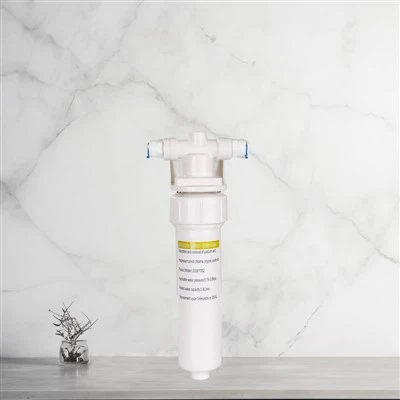


The function of the water filter is to remove floating objects, heavy metals, bacteria, viruses, residual chlorine, sediment, rust, microorganisms, etc. in the water. It has high-precision filtration technology, and the five-stage filtration technology of water purifiers for home use The first stage is the filter element, also known as PP cotton filter element (PPF), the second stage is the granular activated carbon (UDF) filter element, the third stage is the precision compressed activated carbon (CTO) filter element, the fourth stage is the reverse osmosis membrane or ultrafiltration membrane, and the third stage is the reverse osmosis membrane or ultrafiltration membrane. The fifth level is post-activated carbon (small T33). Water purifiers are not only suitable for areas with serious tap water pollution, but can also filter out residual chlorine in regular tap water, and can also improve the taste of water.
First level: PP cotton: removes various visible objects/dust and impurities in tap water.
Second and third levels: Pre-activated carbon: The third level of some low-end water purifiers is also made of PP cotton, and the carbon removes chlorine and organic impurities. It also absorbs odors, colors, and odors caused by organic compounds in the water.
Level 4: Ultrafiltration or reverse osmosis membrane: The membrane can remove bacteria, viruses, spores, and other substances in the water.
Level 5: Post-activated carbon device: further improves taste and removes odor.

A water filter removes impurities by lowering contamination of water using a fine physical barrier, a chemical process, or a biological process. Filters cleanse water to different extents, for purposes such as: providing agricultural irrigation, accessible drinking water, public and private aquariums, and the safe use of ponds and swimming pools.
Benefits of Water Filter
A water purifier filters out disease-causing bacteria
Coli, salmonella, and cholera are among the many diseases that have been spreading the world over and are not uncommon in India too. The right water purifier can filter up to 99 per cent of these bacteria making the water you drink significantly safer.
It could help prevent respiratory conditions
Carcinogenic compounds that are created when chlorine reacts with the organic compounds in your drinking water are one of the reasons that cause respiratory conditions such as asthma. To be sure, chlorine kills off most bacteria and parasites in the water but a good water purifier protects you against the harmful effects of chlorine.
Purified water is good for your muscles and joints
75 per cent of our body’s muscles are made up of water. Staying hydrated is therefore one of the best ways to avoid muscle cramps and muscle injury. Drinking lots of water helps keep the joints well lubricated and you healthier!
It also improves skin health
The benefits of drinking 5-6 litres of purified water are well known. When you drink more water you are helping flush out harmful toxins from the body. This in turn helps you get healthier skin, better complexion and overall great skin health.
A water purifier also eliminates chemicals and heavy metals from the water
It’s not just the bacteria and viruses that a water purifier filters in our water. Our water sources can contain chemicals and heavy metals like lead, mercury and chlorine that can have detrimental effects on our health. A water purifier filters the water to reduce the concentration of these elements, ensuring what we consume is safe.
A water purifier is easy on the wallet
After the initial investment of buying a water purifier, you don’t spend a lot of money on it, making it extremely cost-effective and practical in the long run. The alternative source to clean drinking water is to purchase bottled water, which may seem cheap initially but can accumulate significant costs over time. A water purifier ensures that you have easy and reliable access to clean drinking water.
It is also good for the environment
When you choose a water purifier, you’re automatically reducing the use of plastic in the form of single-use water bottles. These plastic bottles are extremely difficult to dispose of and major contributors to environmental pollution. With a water purifier, you’re minimising your ecological footprint.
A water purifier ensures better-tasting water too
Impurities and contaminants in water make it unpleasant to drink and, in some cases, smell poorly. When a water purifier filters these contaminants out, it provides better-tasting, clean and safe water. This also improves our water consumption, keeping ourselves hydrated at all times.
And it helps preserve minerals that are good for you
Water purifiers don’t just filter any and every element from the water. While they remove the harmful ones, they are also designed to retain essential minerals like calcium, magnesium and potassium. These are pivotal for good health, and investing in such water purifiers is good for an improved lifestyle.
How do water filters work


Mechanical
The basic idea of mechanical filtration is to physically remove sediment, dirt or any particles in the water using a barrier. Mechanical filters can be anything from a basic mesh that filters out large debris to a ceramic filter which has an extremely complex pore structure for ultra-fine filtration of pathogenic organisms.
A filter that utilises mechanical filtration will usually be given a micron rating which indicates how effective the filters are in terms of the size of the particles it is capable of removing. Common ratings you might see include:
5 micron - Will remove most particles visible to the naked eye.
1 micron – Will remove particles which are too small to see without a microscope.
0.5 micron - Will remove cysts (giardia and cryptosporidium).
Absorbtion
Absorption in water filters is most commonly carried out by carbon, which is highly effective at capturing water-borne contaminants. The reason carbon absorbs contaminants so readily is that it has a huge internal surface which is jam packed with nooks and crannies that can trap chemical impurities such as chlorine.
Most common domestic filters contain granular activated carbon (GAC) which reduces unwanted tastes and odours by absorption. More expensive filters use carbon block elements which are generally more effective and usually carry a micron rating for particle removal.
A variety of different substances can be used to make carbon for filters including wood and coconut shell, with coconut shell filters being more effective but also more expensive.
Sequestration
Sequestration is the action of chemically isolating a substance. Food grade polyphosphate is commonly used in scale inhibiting filters to sequester the calcium and magnesium minerals which cause limescale and corrosion. However, polyphosphate is generally only introduced in very small amounts and it only inhibits scale rather than eradicating it. This means that polyphosphate does not soften the water but instead works to keep the minerals within the solution, preventing them forming as scale on any surfaces they come into contact with.
Due to the hard minerals still being present in the water, scale inhibition isn’t suitable for all applications. Instead, water softening using a process such as ion exchange is usually recommended in water areas with alkalinity levels of 180ppm or more (very hard water) and applications where water is kept at a constant temperature of 95°C or more.
Ion exchange
Ion exchange is a process used to soften hard water by exchanging the magnesium and calcium ions found in hard water with other ions such as sodium or hydrogen ions. Unlike scale inhibition, ion exchange physically removes the hard minerals, reducing limescale and making water suitable for applications where it is kept at a constant high temperature e.g. in commercial coffee machines.
Ion exchange is most commonly carried out using an ion exchange resin which normally comes in the form of small beads. A similar type of resin is used in some Water Softeners and in the case of a water softener the resin utilises sodium ions which need to be periodically recharged to prevent the resin becoming ineffective. As water filters are usually sealed units you would simply replace the filter with a new one though it should be noted that
Calcium Treatment Units (CTUs) can be returned to the supplier and regenerated.
Resins that utilise sodium ions aren’t usually used in drinking water filters as the amount of salt (sodium) that can be present in drinking water is legally limited to 200 milligrams/litre. As sodium ion exchange increases salt levels, a hydrogen based ion exchange resin is the preferred option for filters.
Reverse osmosis
Reverse osmosis (RO) is the process of removing dissolved inorganic solids (such as magnesium and calcium ions) from water by forcing it through a semipermeable membrane under pressure so that the water passes through but most of the contaminants are left behind.
Reverse osmosis is a highly effective way of purifying water and is usually combined with a number of other filters such as a mechanical (sediment) filter and an absorption (activated carbon) filter in order to return water with few contaminants remaining.
Reverse osmosis systems use water pressure to force water through the membrane so it uses no electricity, though a certain amount of waste water is produced that has to be sent to the drain. The extra filters involved in multi-stage water filtration can make a reverse osmosis unit more expensive than other filtration methods but in applications where 99.9% pure water is required, RO offers the finest level of filtration available as is increasingly being used to treat water made for Coffee
10 types of water filters
Sediment filters
These filters are used to filter out sediments like large particulate matter, dust, sand, silt rust, etc. In most cases, sediment filters act like a first line of defense or pretreatment filters. They ensure that the water available for purification is free of large contaminants, thereby protecting the next-stage filtration system from damage and extending its life. The medium used for this type of filtration is usually sand or red brick, known as grit.
Reverse osmosis
In this type of filtration system pressure is used to reverse the natural flow of liquids through a semipermeable membrane.RO is one of the most popular water filters for homes as it removes up to 99 percent of total dissolved salts and a host of contaminants from water, making it ideal for consumption. Reverse Osmosis systems are relatively expensive to install and maintain. It also leads to water wastage.
Distillation
This is a filtration system that uses high levels of heat, to boil the contaminated water and then cool down the steam that arises from this boiling process. This is then condensed back to clean drinking water. The contaminants are left behind in the boiling vessel as they cannot evaporate. This method is very effective in eliminating bacteria like coliform as well as lead, arsenic, etc. This is an expensive process that requires a lot of energy.
Ion exchange filters
These filters use an ion exchange resin, with positively charged hydrogen ions (H+) in it. They are porous, bead-like substances that attract and exchange ions in water, depending on their charge. They remove contaminants by attracting ones with the same charge. They also soften water by replacing the sodium ions which cause hardness, with potassium (k) or hydrogen. This process of filtration does not require heat or electricity to work, but it is very expensive, as ion exchange resins are costly to replace.
UV filters
In this process, ultraviolet rays are used to destroy microorganisms like e coli and staphylococcus in the water. But ultraviolet rays kill only living things, so this method does not remove harmful chemicals and metals present in the water. Hence, this is best used in tandem with other methods like RO or activated carbon.
Ultrafiltration
While this is like RO in that it uses membrane filtration, UF filters out particles larger than 1 nanometer compared to 5 nanometers in RO, ensuring that it removes more turbidity and contaminants. Although UF is more effective than RO and does not require energy to operate, it is more expensive.
Activated alumina
This is useful when the source water has a high TDS or sulfate concentration. Activated alumina cartridges have granules with absorptive surfaces that absorb contaminants as water passes through. Regeneration of activated alumina is best done by professionals, as dangerous chemicals can be produced. It is also not a popular household choice.
Ceramic filters
These filters have tiny pores on their surface that trap matter larger than them, thus filtering water. They are inexpensive and do not require electricity. Ceramic filters treated with silver can destroy bacteria and prevent mold, but they are ineffective against viruses.
Air-injected iron filters
These filters use oxygen to clear off iron and manganese from the water. Air is induced in front of the pressure tank by using a venturi. The oxygen thus pushed through the pressure tank can be used to oxidize iron and manganese. But higher levels of iron cannot be removed by this method.
Chemical injection iron filters
In this system, chlorine is injected via a chemical feed pump into the water. The chlorine reacts with the iron to form rust which is then removed by a sediment filter after it has oxidized. This is followed by a carbon filter which removes the excess chlorine. It is mostly used to remove bacteria, iron, and hydrogen sulfide from well water.
Water Filter vs. Water Purifier
Water filters are effective at removing many contaminants, including chlorine, sediments, and bacteria. However, they are not capable of removing viruses, which can still pose a risk to your health. Water purifiers, on the other hand, use technologies like UV light and reverse osmosis to eliminate a broader spectrum of harmful substances, providing a higher level of water safety.
Water filters offer a higher degree of customizability compared to water purifiers. You can choose from a variety of water filter types and methods, such as filter pitchers, faucet-mounted filters, and under-sink filters. This allows you to target specific water sources within your home. Water purifiers, however, are often designed for whole-house applications, limiting your options for more localized solutions.
Cost is a significant factor for many people when choosing between water filters and water purifiers. Water filtration systems tend to be more affordable, with simple devices like filter pitchers and faucet filters available at a low cost. Water purification systems, due to their advanced technology and comprehensive cleaning capabilities, are more expensive both in terms of initial purchase and installation.
Water filters need more frequent maintenance, with filter replacements required every few months. Water purifiers, while also requiring regular maintenance, tend to have longer-lasting components. For instance, UV lamps and reverse osmosis membranes may only need replacement every one to five years, depending on the system and usage.
When it comes to DIY installation and maintenance, water filters are more user-friendly. You can install many filter systems, such as pitchers and faucet filters, on your own with minimal tools and expertise. In contrast, water purification systems require professional installation due to their complexity and the need to connect to your home’s main water supply line. This often involves pipe cutting and soldering, so it’s best to consult with a local water softener installation company.
Tips to maintain your water purifier
Take care of the RO membrane: In the reverse osmosis process, water is pushed at a high pressure through a thin membrane which separates the solutes from the solvent. Only the pure solvent is allowed to pass through the membrane. If your source water is of very bad quality, this membrane is subjected to continuous assault from contaminants, which may clog or damage it. The RO membrane is like the heart of your purifier and cleaning it constantly is very important to ensure that the water is pure, tastes sweet, and is odorless. Ideally, the RO membrane should be changed every 3 to 4 months, depending on the quality of your source water.
Pay attention to sediment filter: RO water purifiers on rent use a sediment filter to filter out large particles of sediments and dirt. This helps to prolong the shelf life of the delicate RO membrane. It protects large impurities from getting into the fine RO membrane. It is recommended to change the sediment filter once a year to ensure its effectiveness
Change filters routinely: The continuous onslaught of contaminants in your source water, may clog your water purifier’s filter after a short period. If the filters are not regularly cleaned, it will affect its ability to purify water. If filters are not changed in the recommended time, the dirt in them may get transferred to the purified water, thus putting you at a health risk. It is prudent to change the filters once every 3 months. Since RO purifiers have filtration stages ranging from three to up to twelve stages, it is ideal to clean and replace your filters periodically, without fail.
Don’t forget the carbon filter: The carbon filter is an important part of your purifier, as it helps to remove chlorine and other dangerous contaminants, which may shorten the life span of the RO membrane. The filter also impacts the taste and odor of the purified water, if left unattended for a long time. It is recommended to change the carbon filter annually.
Attend to drips immediately: One of the advantages of consistent maintenance is that you can identify things like drips and leakages and take corrective actions immediately. It is best to take the help of a professional, to fix drips or leakages if any.
Ensure thorough cleaning: It is important to sanitize your purifier thoroughly and periodically, to ensure effective performance. Clean out the RO tank and pipes at frequent intervals. This will prevent sediment buildup and prevent the tank from being a breeding ground for pathogens. An effective way to go about this, is to clean your water tank and pipes, whenever you replace the filter. Also, ensure to get the pressure nozzle checked.
Xiamen Lishui Technology Co., Ltd. is an innovative manufacturer specialize in providing high quality drinking water solutions. With a passion for everything water, Lishui focus on product development, innovation, manufacturing and services, and committing to provide the best drinking experience for people. We supply the widest range of Filtered Boiling Water, Chilled Water, Sparkling Water and Ambient hot/cold Water Solutions.

Certifications

FAQ
We're well-known as one of the leading water filter manufacturers and suppliers in China. Please feel free to buy or wholesale customized water filter at competitive price from our factory. Contact us for more details.
Water Filter, 3 Stage Drinking Water Filter System, Single Stage Under Sink Water Filter