

Do touch sensor kitchen taps work in low - light conditions?
Jan 19, 2026
Hey there! As a supplier of touch sensor kitchen taps, I often get asked a bunch of questions from customers. One question that pops up quite frequently is: "Do touch sensor kitchen taps work in low - light conditions?" Well, let's dive right in and explore this fascinating topic.
First off, let me give you a bit of a background on how touch sensor kitchen taps actually work. These nifty devices use advanced sensor technology. Most touch sensor taps rely on capacitive sensors. When you touch the tap, it detects the change in capacitance caused by your body's electrical charge. It's a bit like a secret handshake between you and the tap, but instead of a handshake, it's a change in electrical properties that makes the magic happen.
Now, let's talk about light conditions. Light, whether it's bright sunlight or the dim glow of a night - light, doesn't really have a direct impact on how these capacitive sensors function. Capacitive sensors are designed to detect electrical changes, not the amount of light in the room. So, in theory, touch sensor kitchen taps should work just as well in low - light conditions as they do in bright, well - lit kitchens.
I remember one time a customer was really worried about this. They were planning a kitchen renovation and wanted a touch - sensitive faucet but were concerned because their kitchen had very little natural light. They were planning to use soft, ambient lighting for a cozy feel. I assured them that our Touch Sensitive Faucet would work perfectly fine. And guess what? After the renovation was done, they sent me a happy email saying that the tap worked like a charm even in the soft, low - light setting.
But hold on, it's not always that simple. Sometimes, the way a tap is installed can affect its performance in low - light situations, but it's not because of the light itself. For example, if a tap is installed near a source of electrical interference, it might cause false activations or non - responses. This interference could be from other electrical appliances like a blender or a microwave. These appliances can create electromagnetic fields that might mess with the sensor's ability to detect your touch accurately. So, it's important to make sure the tap is installed in an area away from such electrical "troublemakers."
Another thing to consider is the quality of the tap itself. Cheaper, low - quality touch sensor taps might have issues in general, whether it's in low - light or bright conditions. At our company, we take pride in producing high - quality products. Our Touch Control Kitchen Faucet With Sensor is made with top - notch components that are tested rigorously to ensure consistent performance. We've spent hours in our labs, simulating different environmental conditions, including low - light settings, to make sure our taps work flawlessly.
Now, let's talk about some of the benefits of using touch sensor kitchen taps, regardless of the light conditions. First of all, they're incredibly hygienic. In a kitchen, you're handling all sorts of raw food, and your hands can get pretty dirty. With a touch sensor tap, you don't have to turn the tap on and off by hand, which means you're not spreading germs all over the tap handles. It's a small thing, but it can make a big difference in keeping your kitchen clean and healthy.
Secondly, touch sensor taps are super convenient. You know how it is when your hands are full of pots and pans, or you're kneading dough. Instead of trying to find a way to turn on the tap with your elbow or your wrist, you can just give the tap a gentle touch, and water starts flowing. It's like having a personal assistant in your kitchen.
And let's not forget about the modern and sleek look they add to your kitchen. These taps come in a variety of styles and finishes, from classic chrome to modern matte black. They can really elevate the look of your kitchen and make it feel more high - tech.
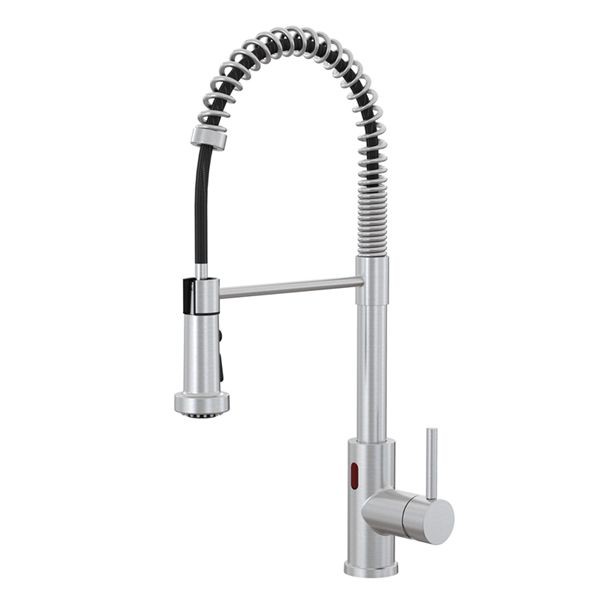
If you're still not convinced, I encourage you to check out our Touchless Kitchen Tap. This tap takes convenience to the next level. It uses infrared sensors to detect the presence of your hands, so you don't even have to touch the tap at all. It works great in low - light conditions too, for the same reason as the touch - sensitive ones - the light doesn't affect the sensor's performance.
In conclusion, touch sensor kitchen taps do work in low - light conditions. The capacitive sensors they use are designed to detect electrical changes in your body, not the amount of light in the room. However, proper installation and choosing a high - quality tap are key to ensuring optimal performance.

If you're in the market for a new kitchen tap and are interested in our products, we'd love to have a chat with you. Whether you have more questions about how our touch sensor taps work or you're ready to place an order, feel free to reach out. We're here to help you make the best choice for your kitchen.
References
- Personal experience with customer installations and feedback.
- Technical documentation on capacitive sensor technology used in touch sensor kitchen taps.