

Do touchless kitchen taps require special plumbing?
Jun 15, 2026
Hey there! As a supplier of touchless kitchen taps, I often get asked the question: “Do touchless kitchen taps require special plumbing?” Well, let's dive right into this topic and clear up any confusion.
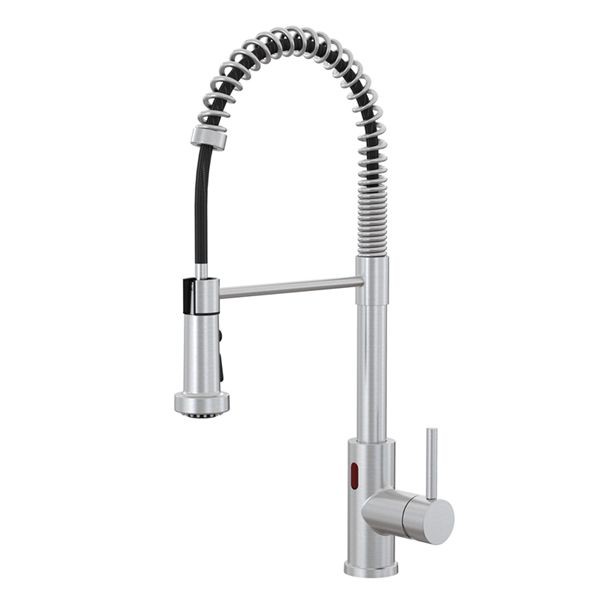
First off, let's understand what touchless kitchen taps are. These are the cool, modern faucets that turn on and off without you having to touch them. You just wave your hand in front of a sensor, and voila! Water starts flowing. It's not only super convenient, especially when your hands are dirty or full, but also more hygienic as it reduces the spread of germs. We offer a variety of touchless kitchen taps, like the Touchless Kitchen Faucet With Sprayer, which comes with a handy sprayer for all your washing needs, and the Touchless Commercial Kitchen Faucet, perfect for high - traffic commercial kitchens.
Now, back to the main question. In most cases, touchless kitchen taps don't require special plumbing. The basic plumbing setup for a touchless tap is quite similar to that of a traditional tap. You still need hot and cold water supply lines, and a drain line. The main difference lies in the addition of the sensor and the electronic components.
The water supply lines for touchless taps are usually the same size as those for regular taps. Typically, they are 1/2 - inch or 3/8 - inch pipes, depending on your local plumbing standards. These pipes connect the tap to your home's water supply system. Whether you have a well - water system or a municipal water supply, the touchless tap can be integrated without major modifications.
When it comes to the drain line, it's also pretty standard. It needs to be properly connected to the sink's drain to ensure that water flows out smoothly. The only thing you might need to pay attention to is the placement of the sensor and the electronic box that controls the tap. You need to make sure there's enough space under the sink to install these components without interfering with the plumbing lines.
However, there are some situations where you might need some minor plumbing adjustments. For example, if you're replacing an old, single - handle tap with a touchless tap that has separate hot and cold water controls, you'll need to connect two water supply lines instead of one. But this is a relatively simple job that a professional plumber can handle in no time.
Another aspect to consider is the power source for the touchless tap. Most touchless taps can be powered by batteries or a direct electrical connection. If you choose the battery - powered option, there's no need for any additional electrical wiring. You just need to replace the batteries periodically. On the other hand, if you opt for a direct electrical connection, you'll need to have an electrician install a power outlet under the sink. This is a bit more involved, but it ensures a continuous power supply for the tap.
Let's talk about the installation process. Installing a touchless kitchen tap is not rocket science. If you're handy with tools and have some basic plumbing knowledge, you can probably do it yourself. But if you're not confident, it's always a good idea to hire a professional plumber. They have the experience and the right tools to ensure that the tap is installed correctly and safely.
During the installation, the plumber will first turn off the water supply to the sink. Then, they'll remove the old tap and clean the sink surface. Next, they'll install the new touchless tap, connecting the water supply lines and the drain line. If it's an electrically - powered tap, they'll also connect the power cable to the outlet. After that, they'll test the tap to make sure it's working properly.
One of the benefits of touchless kitchen taps is that they are designed to be compatible with most existing plumbing systems. Our Touch Control Kitchen Faucet With Sensor is a great example. It can be easily installed in your kitchen without causing a lot of hassle.
In addition to the plumbing requirements, you also need to think about the maintenance of touchless kitchen taps. The good news is that they are generally low - maintenance. You just need to keep the sensor clean to ensure accurate operation. Wipe it down regularly with a soft, damp cloth to remove any dirt or debris. Also, check the batteries or the electrical connection from time to time to make sure the tap is getting enough power.
If you're thinking about upgrading your kitchen with a touchless tap, don't let the plumbing concerns hold you back. As I've mentioned, in most cases, the plumbing requirements are not that different from traditional taps. And if you do need some minor adjustments, a professional can take care of it quickly.
At our company, we're committed to providing high - quality touchless kitchen taps that are easy to install and use. We understand that every customer's needs are different, so we offer a wide range of products to choose from. Whether you're looking for a simple, single - hole touchless tap or a more advanced model with multiple features, we've got you covered.

If you're interested in our touchless kitchen taps and want to learn more about the installation process or our product range, feel free to reach out. We're here to answer all your questions and help you make the right choice for your kitchen. You can start the conversation by visiting our website and exploring our product offerings. We look forward to working with you to transform your kitchen into a more modern and convenient space.
References
- Plumbing Handbook for Residential and Commercial Installations
- Manufacturer's Guides for Touchless Kitchen Taps