

How accurate are sensor taps in detecting hand movement?
Oct 12, 2026
Sensor taps have revolutionized the way we interact with water fixtures in both residential and commercial settings. As a leading supplier of sensor taps, I've witnessed firsthand the growing demand for these innovative products. One of the most frequently asked questions by our customers is about the accuracy of sensor taps in detecting hand movement. In this blog, I'll delve into the technology behind sensor taps, factors affecting their accuracy, and how we ensure high - performance in our products.
The Technology Behind Sensor Taps
Sensor taps rely on various technologies to detect hand movement. The most common types are infrared sensors and capacitive sensors.
Infrared sensors work by emitting infrared light. When a hand is placed in front of the tap, the infrared light is reflected back to the sensor. The sensor then detects this change in the light pattern and triggers the water flow. These sensors are widely used because they are relatively inexpensive, easy to install, and can detect movement from a reasonable distance.
Capacitive sensors, on the other hand, detect changes in the electrical capacitance in the surrounding area. When a hand approaches the tap, it disrupts the electrical field around the sensor, causing a change in capacitance. The sensor then registers this change and activates the water flow. Capacitive sensors are often used in touch - sensitive applications and can provide a more precise detection, especially for close - range interactions.
Factors Affecting the Accuracy of Sensor Taps
Several factors can influence how accurately sensor taps detect hand movement.
Environmental Conditions
The surrounding environment plays a crucial role in the performance of sensor taps. For example, bright sunlight or strong artificial light can interfere with infrared sensors. Excessive light can cause false readings, making the tap turn on or off unexpectedly. Similarly, high humidity or water splashes can affect the electrical properties around capacitive sensors, leading to inaccurate detection.
Mounting Position
The way the sensor tap is mounted can also impact its accuracy. If the tap is installed at an incorrect angle, the sensor may not be able to detect hand movement effectively. For instance, if an infrared sensor is tilted too far down, it may not detect hands placed at a normal height in front of the tap.
Sensor Quality
The quality of the sensor itself is a significant factor. High - quality sensors are designed to be more sensitive and reliable. They are better able to filter out background noise and interference, ensuring accurate detection. At our company, we source only the best sensors from reputable manufacturers to guarantee the performance of our Touch Sensitive Faucet.
Object Detection Range
Each sensor has a specific detection range. If a hand is placed too far away or too close to the tap, the sensor may not be able to detect it accurately. Some sensors are designed for short - range detection, while others can detect objects from a greater distance. It's important to choose a sensor tap with a detection range that suits the intended use.
Ensuring High Accuracy in Our Sensor Taps
As a supplier of sensor taps, we take several steps to ensure that our products offer high - accuracy hand movement detection.
Advanced Sensor Technology
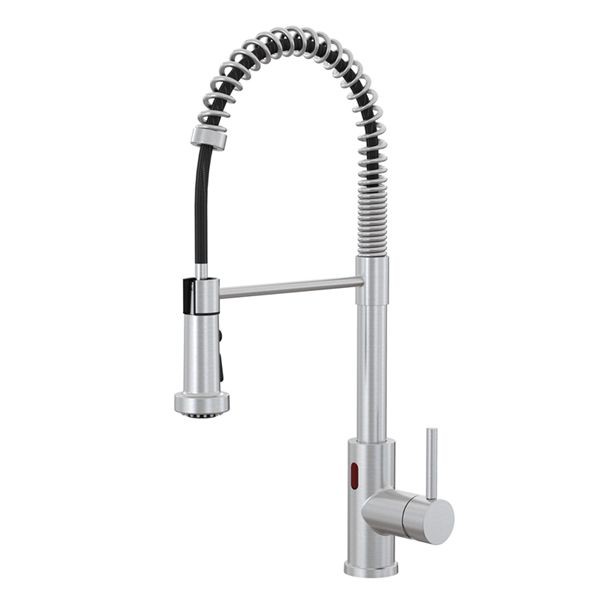
We invest in the latest sensor technology to improve the performance of our taps. Our Touch Sensor Kitchen Tap uses a combination of infrared and capacitive sensors in some models. This dual - sensor approach allows for more accurate detection in different environmental conditions. The infrared sensor can detect hands from a distance, while the capacitive sensor provides precise detection for touch - based interactions.

Rigorous Testing
Before our products are released to the market, they undergo rigorous testing. We test our sensor taps in various environmental conditions, including different levels of light, humidity, and temperature. We also test the taps with different hand movements and positions to ensure that they can accurately detect all types of usage scenarios.
Customizable Settings
We understand that different customers may have different requirements. That's why our Touch Control Kitchen Faucet With Sensor offers customizable settings. Customers can adjust the sensitivity of the sensor, the detection range, and the duration of water flow according to their needs. This flexibility allows for optimal performance in different applications.
Real - World Applications and User Experiences
In real - world settings, the accuracy of sensor taps can have a significant impact on user experience. In public restrooms, for example, accurate sensor taps can help conserve water by ensuring that the water only flows when needed. They also reduce the spread of germs by eliminating the need for manual contact.
In residential kitchens, sensor taps offer convenience and a modern touch. Homeowners can easily turn on the water with a simple wave of their hand, even when their hands are dirty or full. Our customers have reported high satisfaction with the accuracy of our sensor taps, noting that they work reliably in various situations.
Conclusion
The accuracy of sensor taps in detecting hand movement is influenced by multiple factors, including environmental conditions, mounting position, and sensor quality. However, with advanced technology, rigorous testing, and customizable settings, we can ensure that our sensor taps offer high - performance and reliable detection.
If you're interested in upgrading your kitchen or restroom with high - quality sensor taps, we'd love to hear from you. Our team of experts can provide you with detailed information about our products and help you choose the best solution for your needs. Whether you're a homeowner, a business owner, or a contractor, we're committed to providing you with the best sensor tap products on the market. Contact us today to start a conversation about your sensor tap requirements.
References
- "Principles of Infrared Sensors" - Sensor Technology Handbook
- "Capacitive Sensing: Theory and Applications" - IEEE Transactions on Sensors
- "Environmental Effects on Sensor Performance" - Journal of Applied Sensor Technology