Should You Feed a 3-in-1 Tap With Hard or Softened Water?
Jun 20, 2026

What is a 3-in-1 Water Tap and Why Does Water Type Matter So Much?
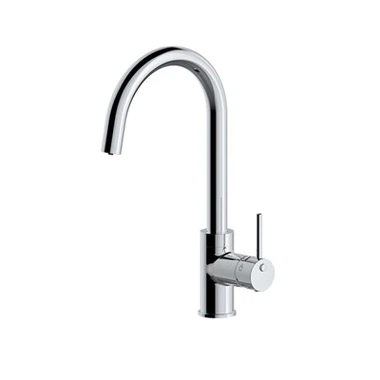
A 3-in-1 water tap replaces your standard kitchen tap, delivering three distinct water flows from a single spout. First, you have the standard main cold water, then standard hot water, and instant, near-boiling water at about 98-100 °C.
At first glance, you can see how this tap looks sleek and simple on your countertop while offering immense convenience from hot and cold water at the touch of a button. But the real magic happens under the sink, where the engineering challenge also arises.
Your 3-in-1 boiling water tap relies on a compact pressurized boiling tank that's constantly plugged into your mains electricity. This keeps a reservoir of water that's heated and ready to pour at a moment's notice. Because your tank operates under constant thermal stress, its chemical environment changes rapidly. Therefore, the wrong water feed won't just alter your water's taste but also determine how long the system will last.
The Problem with Hard Water for your 3-in-1 Tap
If you live in a hard water zone, pouring unfiltered water into a pressurized under-sink boiler tank can cause some problems. If you had a standard countertop kettle, you could easily spot the limescale issues on time, and rinse it out with vinegar.
A 3-in-1 tap hides all that buildup inside a stainless steel or copper tank. So, you won't be able to see the scale or rinse it out.
When hard water enters the high-heat environment, dissolved calcium and magnesium minerals solidify instantly on the heating elements of your tap. This creates a thick thermal barrier that looks like concrete.
If left unchecked, your tank has to run longer and draw more electricity as it struggles to heat your water. This thermal strain is why overscaled tanks top the list of common 3-in-1 water tap negative reviews.
Nevertheless, most experts would also tell you that allowing a tank to choke on limescale buildup is considered environmental neglect. Doing so can void your warranty.
Why Softened Water isn't the Answer
Softened water might seem like the fix. But it creates new problems. Here is what happens when you plug the boiling tap directly into your home's water softener:
High sodium levels
Ion-exchange water softeners work by swapping calcium and magnesium ions for sodium (salt) ions. This is great for your shower, dishwasher, and washing machine. But it isn't good for drinking. According to global health standards, water treated by softeners releases too much salt for drinking. Such water should also never be used to prepare infant formula because the sodium levels are not safe for a baby's developing kidneys.
Flat tasting hot drinks
Heavily softened water strips away natural minerals that help extract the optimal flavor from coffee beans and tea leaves. Without those trace minerals, your premium morning brew would taste flat.
Aggressive water corrosion
Highly softened water also becomes aggressive. Because it is stripped of minerals, it actively seeks to bind with metals. Therefore, it can accelerate micro-corrosion in internal tank components like the copper fittings, solder joints, and the electric fill sensor.
How to Set Up the Right Water Feed
Your 3-in-1 tap is already one of the most innovative kitchen boiling-water tap solutions. But you must protect your tank by providing the correct water source. Here's the setup, I recommend that protects your tank and drinking water:
Configure your kitchen lines.
By standard plumbing guidelines, your kitchen cold tap should always draw unsoftened water straight from the rising main. This keeps your everyday mineral-rich, safe for drinking, and free of the sodium that softeners add. Therefore, you should only run your home's softened water line exclusively to the regular hot side of your kitchen tap. This guides you to the luxury of scale-free sudsy water for dishwashing.
Note that some homeowners prefer completely softened water on both hot and cold sides of their main sink. If you choose that route, your plumber must install a split layout under the sink and run a dedicated unsoftened cold mainline bypass to feed the boiling water system.
Install a scale-inhibitor filter.
Now, for your boiling water system, you need to feed in the unsoftened cold water main, but with a dedicated scale-control mini filter. These specialized filters won't add heavy salt to your water. Instead, they use advanced carbon blocks to prevent limescale from building up on your kitchen tap's components. To learn more about filter systems, look at our detailed guides on one-stage filtration systems for basic control and two-stage filtration systems for tougher water conditions.
Replace your filters regularly.
Depending on how hard your water is, replace your inline scale filters every 6 to 12 months. That way, your filters continuously eliminate unwanted chemicals and limescale from your water supply at optimal levels.
Flush the tank
If you live in an area with exceptionally harsh water, do a quick tank flush annually. This simple maintenance step clears out any loose sediment or trapped particles that the filter caught and dropped. It will also keep your system running smoothly for years to come.
The Bottom Line
At the end of the day, your 3-in-1 tap is a high-performance appliance operating under constant stress to give you the convenience of near-boiling or boiling water. When water is subjected to extreme heat in a closed chamber, its chemical properties change rapidly. That's why feeding raw hard water makes the minerals solidify like concrete. And switching to standard softened water would only create an aggressive environment that damages the internal metal linings and electronic sensors.
The answer is to connect your appliance directly to your unsoftened water mains and install a filter. That way, you can protect your family's health and protect your investment. Take care of your water setup from day one, and your 3-in-1 tap will deliver years of flawless, convenient service. Do you have questions about installing a 3-in-1 boiling water tap or choosing the right filter for your setup? Reach out to our support team today, and we will map out the perfect system for your kitchen.